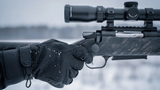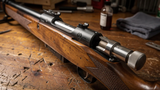


Key Takeaways
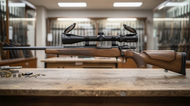
The right scope ring height keeps your optic as low as practical over the bore while still clearing the barrel, bolt handle, and scope covers. Correct height improves comfort, consistency, and practical long range accuracy. Here is what you need to know before selecting rings.
- Mount the scope as low as you can without the objective bell contacting the barrel. A minimum clearance of 2 to 3 mm is necessary to prevent the scope from touching the barrel.
- Match ring diameter and mounting system to the optic and rifle before choosing a height. A 30mm scope requires 30mm rings for proper fit.
- Check cheek weld first, then clearance. Proper ring height allows for a natural cheek weld when shouldering the rifle.
- "Low," "Medium," and "High" labels vary by brand. Always verify the manufacturer's actual measurements in inches or millimeters.
- Taller mounts are often preferred for prone and long range work with large objectives, while traditional hunting rifles usually perform best with low or medium rings if cheek weld allows.
- Medium rings are ideal for most traditional bolt-action rifles paired with 40–44 mm objectives.
- A simple measurement method, a ring height calculator approach, tables, examples, and a step-by-step mounting checklist are all covered below.
With over 35 years of machining and hunting experience, plus precision CNC manufacturing in Alaska, Alaska Arms sets scope height on dangerous-game rifles and long range hunting rifles using the same process described in this guide.
Quick Answer: How Do You Choose the Right Scope Ring Height?
Choose the right ring height by first shouldering the rifle and finding a natural cheek weld, then selecting rings that place the scope's optical center in line with your eye while keeping the objective and eyepiece clear of the barrel, receiver, and bolt. The primary goal is to mount the optic as low to the bore as possible - but "as low as practical" matters more than "as low as physically possible." The process combines checking your eye position, measuring scope height needs, consulting ring height charts or a scope ring height calculator, and doing a dry-fit test on the rifle.
Why Scope Ring Height Matters for Real-World Accuracy
Scope ring height significantly impacts comfort, eye alignment, and shooting posture. It also determines whether your optic survives rough field conditions without contact damage. Different firearms naturally require different optic heights, and getting the height wrong in either direction creates problems that compound with distance and recoil.
When the scope sits too low:
- The objective bell contacts the barrel, which can damage both surfaces, introduce vibration, and destroy your zero
- The bolt handle may strike the eyepiece during cycling
- Scope covers or lens caps rub against the barrel or stock
- A scope mounted too low can cause neck strain during shooting, forcing the shooter to crane downward
When the scope sits too high:
- Mounting the scope too high affects cheek weld consistency, creating a floating "chin weld" instead
- Eye alignment becomes inconsistent shot to shot
- Quick target acquisition slows down because the shooter hunts for the reticle image
- Long range accuracy suffers because small head position changes translate into noticeable point-of-impact shifts beyond 400–500 yards
- Too high rings can cause poor cheek weld and neck strain over extended shooting sessions
Scope height affects shooting comfort and accuracy in a direct, measurable way. The scope itself doesn't shoot differently at various heights - the mechanical precision of the rifle is unchanged. But improper scope height can cause inconsistent shooting performance because the shooter's form breaks down. A higher-mounted scope can also change the bullet trajectory relative to your line of sight, which matters for ballistic calculations.
For rifles chambered in heavy-recoil cartridges like .338 Win. Mag. or .375 Ruger, proper ring height also prevents excess stress on the scope tube and mount. The objective bell must clear the barrel to prevent damage and maintain zero, especially when recoil drives everything forward under firing and increases stress on the scope mount.
Understanding Ring Height, Scope Height, and Mounting Systems
Before you start measuring, you need to speak the same language as the ring manufacturers. The terms "ring height," "scope height," and "height over bore" get used loosely, and different brands measure them differently.
- Scope height over bore is the distance from the rifle's bore centerline to the scope's optical center. This number matters for ballistic calculators and long range dope - get it wrong and your elevation solutions will be off.
- Ring height typically refers to the measurement from the top of the rail or base to the center of the ring. Some manufacturers report height to the bottom of the tube instead. Always check which definition a brand uses before comparing Low, Medium, or High labels across brands.
- Ring diameter must match the scope tube diameter exactly. Common scope tube sizes include 1 inch, 30mm, and 34mm. Mismatched scope rings can lead to accuracy issues, tube damage, and tracking problems. Scope rings must match the scope tube diameter exactly - there is no workaround.
- Mounting systems include integral dovetails (Ruger, CZ), Picatinny rails, Weaver bases, and proprietary systems. Choose the correct ring base for the rifle's interface first, then make sure the scope rings match that mounting system before picking height rings.
- There is no universal standard for what "Low," "Medium," or "High" means. MDT defines Low as 0.820″ to center, while another brand's "Low" might be 0.60″. Rely on actual measurement specs and charts, not labels alone.
How to Calculate the Right Scope Ring Height (With Examples)
A practical way to determine the correct height is to confirm your scope's tube diameter and measure the objective bell's outside diameter. Use a calculator to determine the correct ring height, or work through the formula by hand.
The Basic Formula
For a scope mounted on a rail or base, the minimum required ring height (measured to scope center) is approximately:
Required Ring Height ≈ (Objective Bell Outside Diameter ÷ 2) − (Tube Diameter ÷ 2) − Base/Rail Height + Safety Margin (0.05–0.10″)
If the manufacturer lists "height to scope center," compare directly. If they list "height to bottom of tube," add half the tube diameter to convert.
Example 1: Long Range Hunting Scope
A 3–15×50 scope with a 30mm tube on a Picatinny rail:
- Actual objective bell outside diameter: ~56mm (2.205″) - note that a "50mm objective" often has a larger bell housing
- Half of bell OD: 1.103″
- Half of tube diameter (30mm = 1.181″): 0.591″
- Rail height above receiver: 0.400″ (standard Picatinny)
- Safety margin: 0.075″
- Required ring height to center: 1.103 − 0.591 − 0.400 + 0.075 = 0.187″ minimum above rail to scope center
In practice, the lowest available rings from most manufacturers exceed this bare minimum because the ring body itself has structural height. An MDT Low ring at 0.820″ would work for smaller objectives, but for a 56mm bell, you would likely need Medium (1.00″) or High (1.25″) rings depending on barrel contour and receiver geometry.
Example 2: Traditional Hunting Scope
A 2–7×33 scope with a 1-inch tube on a Ruger M77 integral dovetail mount:
- Objective bell OD: ~39mm (1.535″)
- Half of bell OD: 0.768″
- Half of tube diameter (1″): 0.500″
- Base height (integral dovetail, essentially flush): ~0.250″
- Safety margin: 0.060″
- Required ring height: 0.768 − 0.500 − 0.250 + 0.060 = 0.078″
Low rings at approximately 0.50–0.60″ center height clear this easily. The smaller objective diameter and no extra rail height make this a straightforward low-ring setup.
Ring Height Reference Table
|
Ring Height Label |
Typical Centerline Height |
Clears Objectives Up To |
Best For |
|
Low |
0.60–0.90″ |
~40–44mm |
Slim barrels, small objectives, low-comb stocks |
|
Medium |
0.90–1.20″ |
~44–50mm |
Most bolt-action hunting rifles, moderate objectives |
|
High |
1.20–1.40″ |
~50–56mm |
Heavy barrels, large objectives, chassis stocks |
|
Extra High |
1.40–1.60″+ |
56mm+ or raised rails |
AR platforms, closed-top rails, very large objectives |
Values shown are representative. Always check the specific manufacturer's published measurements.
A large objective lens often requires medium or high rings. A 20 MOA base may require higher rings for clearance as well, since the angled base tilts the front of the scope downward toward the barrel.
Other Factors When Determining Ring Height and Scope Position
Raw math is only part of determining scope ring height. Rifle geometry, shooter anatomy, and scope design all change the answer.
- Barrel contour and open sights: Heavy barrels and high front iron sights may need slightly taller height rings to prevent contact, especially with 50–56mm objectives. A slim sporter barrel gives you more room than a bull barrel of the same caliber.
- Bolt handle and ocular bell clearance: Dry-cycle the bolt at full speed with the scope loosely in place. Check that the bolt handle clears the eyepiece, including when wearing gloves or with scope covers attached.
- Stock design: Classic wood stocks with low combs favor lower rings. Rifles with adjustable cheek pieces allow for higher mounting options without sacrificing a solid cheek weld, making medium or high rings viable. Modern chassis stocks often work better with medium height rings or taller.
- Eye relief and fore-aft position: Large scopes or long eye relief optics sometimes sit further back, which can place the objective lower over the chamber, demanding extra clearance from the barrel at its thickest point.
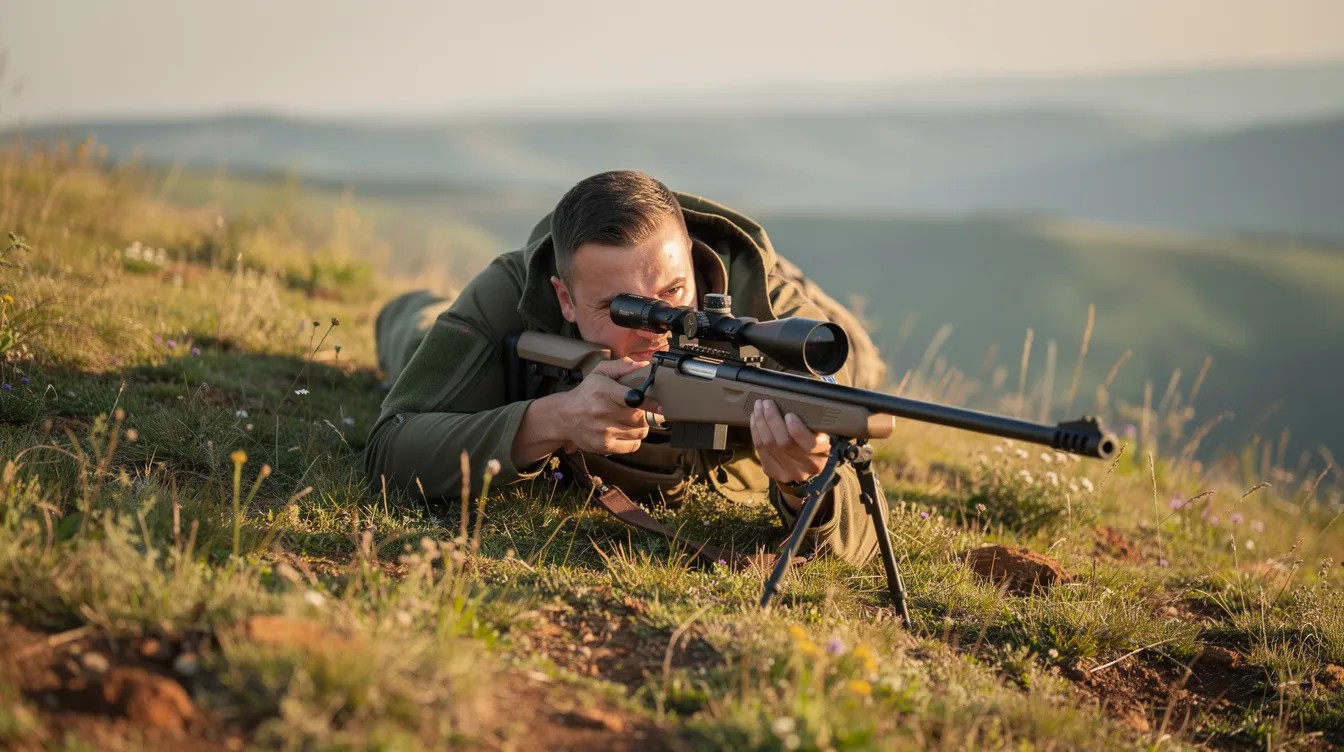
- Shooting position and application: Different shooting styles require different mounting heights. Prone and long range shooters often prefer slightly higher scope height to keep the neck neutral. Mountain hunters typically prioritize low scope height for a compact, snag-free package.
- Accessories: Consider scope covers, sunshades, lens caps, and any night-vision or thermal clip-ons that might require extra rail clearance above the barrel.
Finding the Right Scope Height From the Shooter's Perspective
The "right height" is where calculated clearance and real-world comfort overlap. It is found at the rifle, not at a desk.
- Cheek weld test: Close your eyes, shoulder the rifle naturally, settle your cheek, and open your eyes. If you see a full, centered image through the scope immediately, the height is in the ballpark. If you need to lift or drop your head to achieve proper eye alignment, the height is wrong.
- Shim method: Tape coins or flat spacers to the top of the rail or scope bases in 1/16″ increments. Shoulder the rifle at each increment. The stack that produces the most natural head position tells you the ideal center height - then match that measurement to a ring chart.
- General guidelines: Most traditional bolt-action hunting rifles with 40–42mm objectives and standard stocks end up with low or medium rings as the right scope ring height. Today, many experienced shooters recommend mounting the scope as low as possible while maintaining a comfortable head position, rather than forcing the lowest possible clearance.
- Real-world example: A CZ 457 with a 3–9×40 scope typically clears the barrel comfortably on medium rings with about ¼″ between the objective bell and the rifle barrel - providing good cheek weld for a .22 LR trainer or match rifle.
- A consistent, repeatable cheek weld is more important for long range accuracy than squeezing the scope as low as physically possible to the barrel. If you have to strain your neck to get behind the scope, you have picked the wrong height regardless of what the formula says.
Step-by-Step: Determining and Setting the Right Scope Ring Height
Follow this procedure at the bench to choose and confirm ring height before committing.
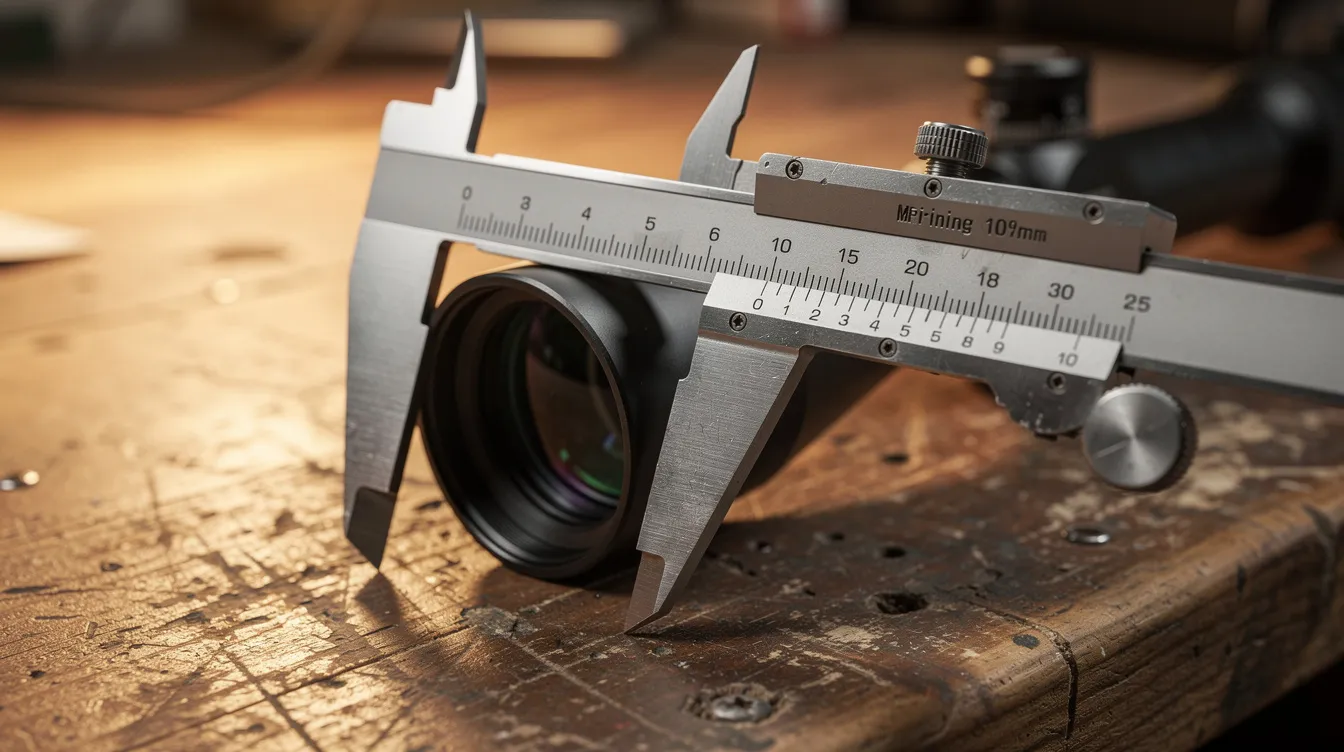
- Confirm the mounting system. Identify whether your rifle uses an integral dovetail, Picatinny rail, Weaver rail, separate scope bases, or a proprietary system. Measure the base height or rail height over the receiver using calipers or the manufacturer's published specs.
- Record scope specs. Note the tube diameter (1 inch, 30mm, 34mm), advertised objective lens size, and - if the manufacturer publishes it - the actual outside diameter of the objective bell. Add 2–4mm if only the lens diameter is given, since the bell housing is always slightly larger.
- Run the formula or use an online scope ring height calculator. Input the objective diameter, tube size, and base height. The output gives a minimum ring height requirement. EGW's ring height chart is a useful cross-reference.
- Select candidate ring heights. From a ring chart, pick Low, Medium, or High rings that meet or slightly exceed your calculated minimum while matching ring diameter and mounting interface. Choose candidates in various heights if possible.
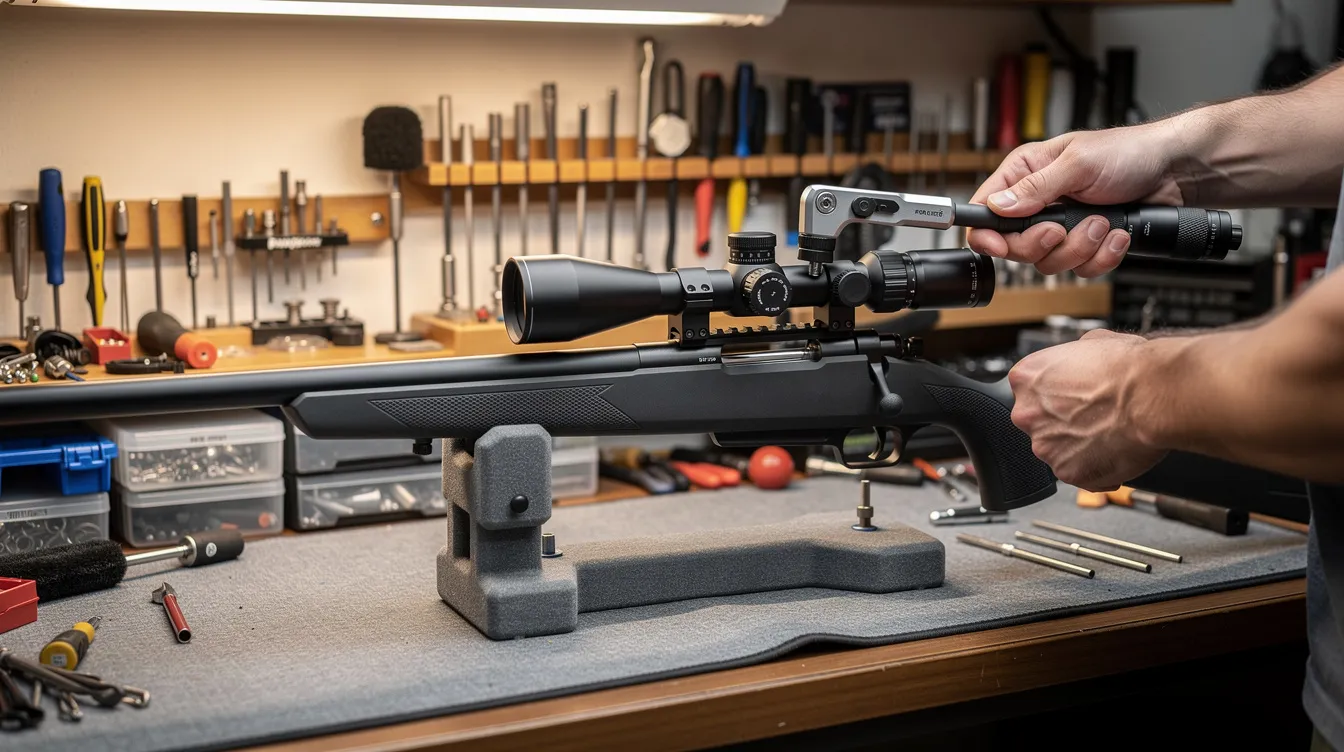
- Dry-fit on the rifle. With the action unloaded, set rings on the base and lay the scope in place without fully tightening the caps. Shoulder the rifle. Check cheek weld, eye relief, and confirm the objective, eyepiece, and bolt handle all clear with room to spare. Test with your normal scope covers and lens caps attached.
- Finalize and torque. Once satisfied, torque rings to manufacturer specs using an inch-pound torque wrench. Verify that cap gaps are even on both sides, that the reticle is level (use a bubble level or rifle level tool), and that the scope does not shift when the rifle is shouldered. Record the final measured scope height over bore in your data book or ballistic app.
Comparison: Low vs Medium vs High Rings for Different Uses
|
Feature |
Low Rings |
Medium Rings |
High Rings |
|
Typical Centerline Height |
0.60–0.90″ |
0.90–1.20″ |
1.20–1.40″+ |
|
Common Objective Fit |
32–42mm |
40–50mm |
50–56mm |
|
Cheek Weld on Standard Stock |
Excellent (if barrel clears) |
Good for most shooters |
May require adjustable comb |
|
Bolt Clearance |
Can be tight on large eyepieces |
Usually adequate |
Ample |
|
Best Use Case |
Classic hunting rifles, slim barrels |
General hunting, all-around setups |
Precision rigs, heavy barrels, chassis |
|
Downsides |
Objective contact risk, cramped neck if too low |
Slight compromise in both directions |
Chin weld risk without comb adjustment |
- Low rings often suit 32–40mm objectives on slim hunting barrels and low comb stocks, giving a classic, compact package.
- Medium rings are the default for 40–50mm objectives on modern stocks. They balance keeping the scope as low as practical with comfortable head position across varied field positions.
- High rings are typically reserved for large objectives on heavy barrels, chassis systems, or straight-line stocks. They can be favored for prone long range shooting where a taller optic keeps the neck relaxed, provided the rifle's stock has adjustable cheek pieces or a high fixed comb.
Always verify each manufacturer's exact ring height measurements before ordering, rather than relying purely on Low/Medium/High labels.
Compatibility: Matching Ring Height to Rifle Models and Applications
|
Rifle Type / Application |
Typical Scope Objective |
Recommended Ring Height Range |
Notes |
|
Classic .30-06 bolt-action, low comb stock |
3–9×40 (40mm) |
Low or Medium |
Slim barrel contour; cheek weld usually good on low |
|
.308 precision chassis rifle |
5–25×56 (56mm) |
Medium or High |
Heavy barrel; adjustable comb compensates for height |
|
Lightweight .300 Win Mag mountain rifle |
2.5–10×42 (42mm) |
Low or Medium |
Keep it compact; consider recoil and stainless steel hardware for corrosion resistance |
|
AR-15 / AR-10 flat-top |
1–6×24 to 4–16×44 |
Integrated mount (1.4–1.5″ centerline) |
One-piece mounts more common than separate rings |
|
Dangerous-game bolt rifle (.375, .416, .458) |
1–6×24 to 2.5–10×42 |
Low to Medium |
Solid cheek weld and quick target acquisition are critical; keep scope low for fast sight picture |
|
Ruger M77 with integral dovetails |
3–9×40 |
Low (Ruger-compatible rings) |
Integral base keeps overall height minimal |
For dangerous-game rifles in heavy calibers, shooters often use slightly lower scope height for a solid cheek weld and faster sight acquisition, but still must clear the barrel with a rugged, reliable right mounting system.
Expert Tips From the Bench and the Field
Gunsmith Tip: Mock up ring height with hardwood shims or stacked business cards on the rail before ordering expensive rings for a new long range scope. Measure the shim stack with calipers, then match that number to the manufacturer's ring spec. This costs nothing and prevents returns.
- Check bolt clearance with gloved hands if the rifle will be hunted in cold conditions. Bulky gloves expose marginal clearance problems around the eyepiece that bare-hand fitting hides.
- Verify scope height in your primary shooting position - prone with a bipod for a long range rifle, sitting or kneeling for a western hunting rifle - and adjust ring height or stock comb accordingly. The shooting style you use most often should dictate the setup.
- Using the correct scope height in ballistic calculators helps produce more accurate elevation solutions. Once zeroed, record your final measured height over bore in a data book or ballistic app. Even 0.1″ of error in this number can shift impacts at extended ranges.
- Precision CNC-machined rings with tight tolerances reduce the risk of misalignment that can force you into taller rings than you actually need. Quality manufacturing matters more than most shooters realize.
Common Mistakes When Choosing Scope Ring Height
- Blindly choosing "low rings" because of tradition. Incorrect ring height can cause scope objective contact with the barrel, or worse, force a cramped head position that introduces inconsistency. Mount the scope as low as practical without touching the barrel - that last word is the key.
- Going far too high "just in case." Mounting the scope too high affects cheek weld consistency and creates a floating chin weld. Incorrect ring height can lead to poor cheek weld and accuracy issues that get worse over a long day of shooting.
- Ignoring ring diameter vs tube diameter. Using 30mm rings on a 34mm tube, or vice versa, compresses or loosely holds the tube. This creates tracking errors, ring marks, and potential scope damage.
- Mixing incompatible bases and rings. Picatinny rings on narrow Weaver bases - or the reverse - then over-torquing to compensate. This misaligns the scope and changes effective scope height unpredictably.
- Forgetting accessories. Lens caps, sunshades, or tall bolt handles that were not present during the initial dry-fit can create clearance problems discovered only after everything is torqued and the rifle is at the range.
- Skipping the cheek weld test. Failing to close your eyes, shoulder the rifle naturally, and check whether you achieve proper eye alignment hides ergonomic problems that show up during extended practice or on a multi-day hunt.
- Relying on "Low/Medium/High" labels alone. Brands define these labels differently. Always check the manufacturer's exact scope height measurements - the difference between one brand's "Medium" and another's "High" can be less than 0.1″.
Product and Setup Recommendations
The goal here is to match ring height to use case, not to push a particular part number.
- Mountain and backcountry rifles with 40–44mm objectives: lightweight, low-to-medium height rings with strong cross-bolts. Prioritize compactness, corrosion-resistant finish, and reliability under hard use.
- Precision long range rigs with 50–56mm objectives: medium or high rings in 30mm or 34mm, with robust clamping and possibly built-in levels. Consistent return-to-zero is the priority. These setups often pair well with stainless steel hardware for extended outdoor exposure.
- Dangerous-game bolt rifles: Quick-detach rings at appropriate height, allowing both a rugged optic mount and the ability to switch to open sights instantly if the scope is damaged in the field.
- Material and torque matching: Match ring material (steel vs aluminum), finish, and torque specs to the rifle's recoil level and environmental conditions. Aluminum is lighter; steel handles repeated heavy recoil better.
Internal and External Resources
For further reading and detailed specs:
- Burris: Measuring Height Over Bore - detailed walkthrough on measuring scope height for ballistic apps.
- NSSF (National Shooting Sports Foundation) - general firearms safety and industry standards.
- Manufacturer spec sheets from Leupold, Nightforce, and Vortex publish exact objective bell outside diameters that are critical for ring height calculations.
- Alaska Arms' About page details over 35 years of precision CNC machining experience and field-tested rifle builds in Alaska.
Frequently Asked Questions
Does changing ring height require re-zeroing the rifle?
Yes. Any change in scope height shifts the optical axis relative to the bore, which changes point of impact. Going from low to medium rings can shift zero by several inches at 100 yards. Always re-zero after changing rings, bases, or any component that alters how the scope sits on the receiver.
How precisely does scope height need to be entered into a ballistic app?
Precision matters more than most shooters expect. An error of 0.1″ in height over bore can shift calculated drop by 1–2″ at 800–1,000 yards, depending on caliber. Measure your final scope height after mounting and torquing, not before, and enter that measured value rather than a manufacturer's nominal ring height.
Should I adjust comb height or ring height first?
Start with ring height. Choose the lowest rings that clear the barrel and bolt, then adjust the comb to meet your cheek. This keeps the scope as close to the bore as possible and uses the stock - which is easier to modify - to fine-tune your head position. Rifles with adjustable cheek pieces make this process straightforward.
Does ring height affect parallax?
Ring height does not directly change a scope's parallax adjustment range. However, if tall rings force you into an inconsistent head position, your eye may sit off the optical axis more often, making parallax error more noticeable at close ranges. The fix is correct ring height and consistent cheek weld, not a parallax knob adjustment.
Can I reuse old rings when upgrading to a new scope?
Only if the old rings match the new scope's tube size and your new scope's objective bell still clears the barrel at that ring height. Measure both the new tube diameter and the new objective bell's outside diameter before assuming the old setup will work. Different scopes with the same nominal tube size can have significantly different bell dimensions, which changes the ring height you need.