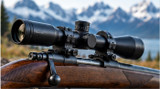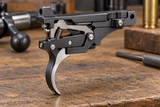


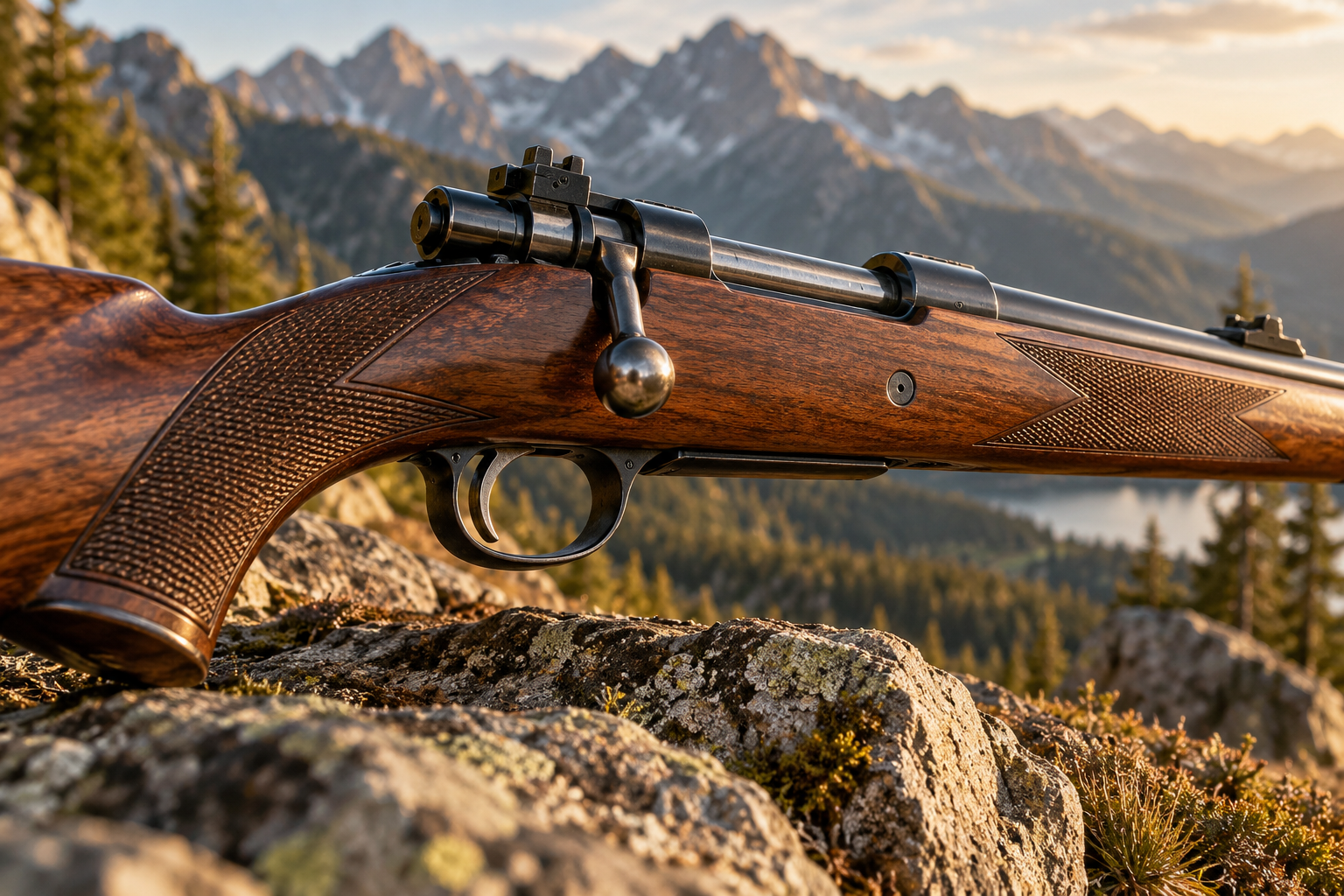
A Mauser 98 can remain mechanically useful for generations, but the trigger is one part of the rifle that directly shapes how confidently and consistently the shooter interacts with the action.
Many original military-pattern Mauser 98 rifles use a rugged two-stage trigger. That design was built around reliability and field use, not the lighter, cleaner feel many hunters and custom-rifle owners now expect. A trigger that is worn, inconsistent, excessively heavy for the rifle's intended use, poorly modified, or simply mismatched to a modern sporting build may be a good candidate for replacement rather than further modification.
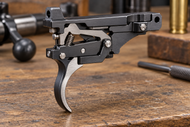
Alaska Arms offers a Winchester Model 70-style adjustable replacement trigger for Mauser 98 applications and lists Mauser components among its current precision firearm offerings. About Alaska Arms
Key Takeaways
- Traditional military Mauser 98 rifles commonly use a two-stage trigger with noticeable first-stage take-up before the sear releases.
- A trigger does not need to be dangerously defective before replacement makes sense. Excessive weight, inconsistency, creep, poor ergonomics, or a mismatch with a modern sporting build can all justify evaluating an upgrade.
- A replacement trigger may provide a cleaner and more predictable interface for a hunting or custom Mauser without changing the basic controlled-round-feed action.
- Historically significant or matching-number rifles should be treated differently from common sporter or custom-build actions. Preserving originality may matter more than modernization.
- Trigger compatibility must be confirmed for the exact Mauser action and safety configuration.
- Trigger installation and adjustment are safety-critical work. Function and safety should be professionally verified before use.
Quick Answer: When Should You Replace a Mauser 98 Trigger?
Consider replacing a Mauser 98 trigger when the existing trigger is damaged, inconsistent, excessively heavy for the rifle's intended use, previously altered in a questionable way, or no longer provides the predictable trigger feel you want from a hunting or custom rifle.
Replacement may also make sense when you are converting a common military-surplus action into a sporting rifle and want a more modern trigger interface rather than continuing to modify the original military mechanism.
A trigger that shows obvious damage, abnormal movement, unreliable engagement, or other questionable behavior should not simply be tuned until it feels right. Stop using the rifle and have the complete trigger and safety system inspected by a qualified gunsmith.
Understanding the Original Mauser 98 Trigger
One reason the Mauser 98 has remained influential for more than a century is that its original military design emphasized ruggedness and dependable operation.
The classic military Mauser 98 uses a two-stage trigger. During the first stage, the shooter takes up initial movement. The second stage provides a more defined increase in resistance before the firing mechanism releases.
That design makes sense in the context for which the rifle was developed. A military rifle may be carried in mud and dirt, in extreme cold, with gloves, through rough handling, and under stressful conditions. The priority was not creating the lightest possible trigger. The priority was producing a simple, durable mechanism that gave the shooter a deliberate firing sequence.
For a collector or military-restoration rifle, that original character may be exactly what you want. For a modern hunting rifle built on a Mauser 98 action, the priorities may be different.
When Is a Mauser 98 Trigger Actually Worn Out?
Trigger replacement should not be based on age alone. A very old trigger can still function correctly if it has been maintained and has not been damaged or improperly altered. At the same time, a much newer trigger can be unsafe if somebody has modified it poorly.
Inconsistent Trigger Feel
A trigger should feel repeatable. If the amount of movement or resistance changes noticeably from one trigger press to another, something may be worn, contaminated, damaged, incorrectly fitted, or previously modified.
Unusually Rough or Gritty Movement
Old rifles accumulate decades of dirt, hardened lubricant, corrosion, wear, and prior repair work. Cleaning and inspection may solve some problems. If the mechanism has damaged surfaces or questionable previous work, replacement may be the better long-term answer.
Evidence of Previous Trigger Modification
Surplus Mausers often have complicated histories. A rifle may have been sporterized, rebarreled, restocked, drilled and tapped, refinished, converted to another chambering, or modified by multiple previous owners. If the trigger geometry or safety relationship appears to have been altered, have it professionally evaluated rather than assuming the existing setup is sound.
Trigger Damage or Abnormal Movement
Any trigger that appears physically damaged or does not move and reset normally needs attention. A trigger is part of the rifle's firing and safety system; questionable behavior should not be dismissed simply because the rifle still fires.
Heavy Does Not Automatically Mean Bad
One common mistake with military Mauser triggers is assuming that a heavy trigger must be defective. That is not necessarily true.
The original two-stage system was intentionally designed for a different set of priorities than a modern sporting trigger. A trigger can be safe, mechanically sound, and historically correct while still feeling heavier or less refined than what a modern hunter prefers.
That distinction is important: you are not always replacing the trigger because the old one has failed. Sometimes you are replacing it because the rifle's job has changed.
When a Trigger Upgrade Makes Sense
You Are Building a Hunting Rifle
Many Mauser 98 actions were converted into sporting rifles after military service. Once the rifle receives a hunting stock, modern optic, altered bolt handle, upgraded bottom metal, or new barrel, keeping the original military trigger may no longer make sense for the overall build.
You Want a More Predictable Break
The goal of a good hunting trigger is not simply low pull weight. Predictability matters more. A shooter should be able to apply pressure without wondering exactly when the trigger will release.
You Have Already Modernized the Rest of the Rifle
If the rifle already has a modern stock, properly fitted scope, upgraded bolt handle, improved bottom metal, new barrel, or other sporting modifications, a replacement trigger can be a logical part of the complete build.
The Existing Trigger Has Questionable Previous Work
Trying to rescue a trigger that has already been modified badly may create more uncertainty than installing a correctly designed replacement and having the rifle properly inspected.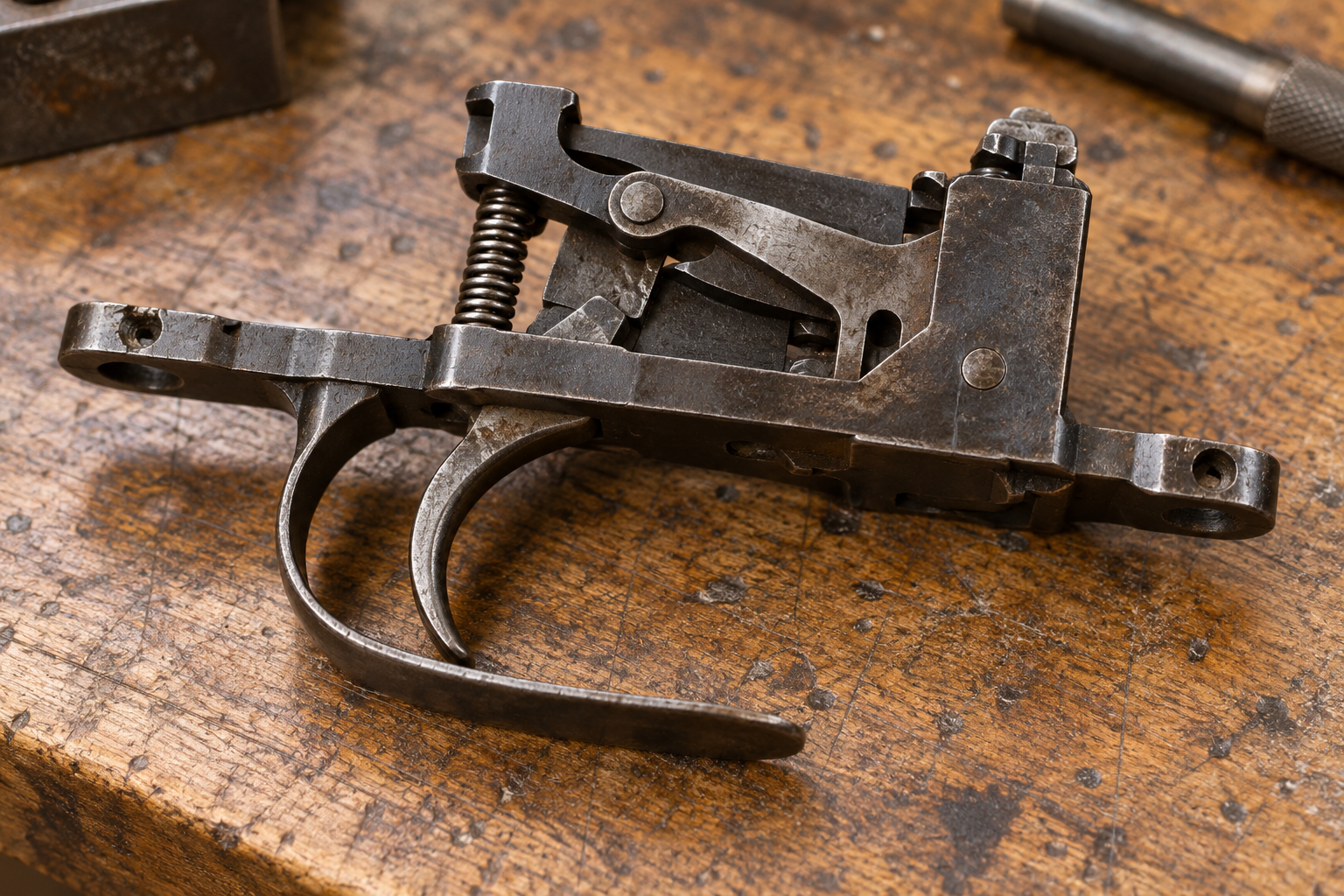
Original Mauser 98 Trigger vs. Modern Replacement Trigger
|
Feature |
Original Military-Style Trigger |
Modern Sporting Replacement |
|
Basic feel |
Traditional two-stage |
Often designed for a cleaner sporting-style break |
|
Design priority |
Rugged military service |
Sporting and custom-rifle use |
|
Historical originality |
Preserves original configuration |
Changes original configuration |
|
Adjustment |
Limited compared with many modern designs |
May provide adjustment depending on design |
|
Collector suitability |
Usually preferable |
Often less desirable on collectible rifles |
|
Custom hunting build |
Functional but traditional |
Often better aligned with modern sporting goals |
|
Installation |
Existing factory system |
Compatibility and professional fitting should be verified |
The comparison is not about declaring one universally better. A matching military rifle and a custom hunting rifle built on a surplus Mauser action have very different priorities.
What Does a Trigger Upgrade Actually Improve?
A replacement trigger does not make the barrel more accurate. It does not change barrel quality, chamber dimensions, ammunition, bedding, scope alignment, or the mechanical accuracy of the action. What it can change is the shooter's interaction with the rifle.
More Predictable Trigger Control
A consistent trigger can make it easier to break a shot without adding unnecessary movement. This matters especially when shooting from imperfect field positions, where stability is already limited.
Better Fit for a Sporting Rifle
Military ergonomics and sporting ergonomics are not identical. A trigger selected for a hunting rifle can complement the stock, optic, bolt handle, and other modifications made to turn a military action into a practical sporting rifle.
Greater Consistency Between Practice and Field Use
A trigger that behaves predictably during training gives the shooter one less variable to manage under field pressure. For cold-weather hunting, where gloves and awkward shooting positions may be present, consistency is generally more useful than chasing an extremely light trigger.
Why Alaska Arms Uses a Model 70-Style Replacement Trigger
Alaska Arms identifies a Winchester Model 70-style adjustable trigger among its Mauser 98 offerings. Company and product background
That design direction fits the same philosophy behind many high-quality Mauser sporter builds: retain the proven Mauser action while adapting the human-interface components for sporting use.
Builders often combine a Mauser 98 action with an altered or Oberndorf-style bolt handle, a modern hunting stock, modern optics, improved bottom metal, and an updated trigger. The goal is to preserve what works while adapting the rifle to a new role.
Should You Upgrade a Collectible Mauser 98?
Not always. This is where the trigger decision becomes as much about the rifle's history as its performance.
A matching-number military rifle in historically important condition is different from a mismatched surplus action, a rifle that has already been sporterized, a bare action used for a new custom build, or a previously modified hunting rifle.
Permanent modifications can reduce collector value. If originality matters, preserving the original trigger may be the better choice even if a modern trigger would feel better.
The same preservation-versus-performance distinction appears in Alaska Arms' existing Mauser content. See When to Replace Your Mauser 98 Bolt Handle for a related example.
Trigger Upgrade vs. Trigger Adjustment
Keep the Existing Trigger When:
- It is mechanically sound
- It operates consistently
- You value original configuration
- The current two-stage feel suits your shooting style
- The rifle is primarily a collector or historical piece
Consider Replacement When:
- The trigger has questionable prior modifications
- The rifle is already being converted into a modern sporter
- You want a different trigger feel
- Existing wear or damage makes replacement preferable
- A compatible replacement better fits the complete rifle build
For a safety-critical component, replacement can sometimes be the cleaner choice than trying to extract more performance from an old or uncertain mechanism.
Compatibility Matters More Than the Words "Mauser 98"
"Mauser 98" covers a broad family of rifles and actions. Over the decades, Mauser-pattern rifles were produced by multiple countries, arsenals, and commercial manufacturers. They were also converted and rebuilt in enormous numbers.
That means you should not assume every trigger marketed for a Mauser 98 will fit every Mauser-pattern rifle without verification.
- The exact action
- Whether it is military or commercial
- Existing safety arrangement
- Stock and trigger-guard configuration
- Any prior modifications
- Whether the rifle already has an aftermarket trigger
Trigger Upgrades and Safety Systems
A replacement trigger cannot be evaluated in isolation. The trigger, sear, cocking piece, bolt, and safety operate as a system. Changing one component means the complete system must still function correctly.
Alaska Arms advises customers to verify safe function after trigger installation and recommends using a competent gunsmith when the owner does not have the proper tools or skills. Alaska Arms FAQ
For most owners, the practical dividing line is simple: selecting the trigger can be a buyer decision. Installing, adjusting, and validating a safety-critical trigger system is gunsmith work unless you are appropriately trained.
Why Extremely Light Is Not Automatically Better
A common misconception is that trigger quality can be measured by one number. It cannot.
A useful trigger for a hunting rifle needs the right combination of predictability, reliability, appropriate resistance, positive reset, safe engagement, compatibility with the rifle, and consistent behavior in actual hunting conditions.
A benchrest-style trigger and a dangerous-game hunting trigger may have very different priorities. The hunter may be wearing gloves, carrying the rifle through brush, or using it in cold, wet conditions. The correct trigger should fit the rifle's real use.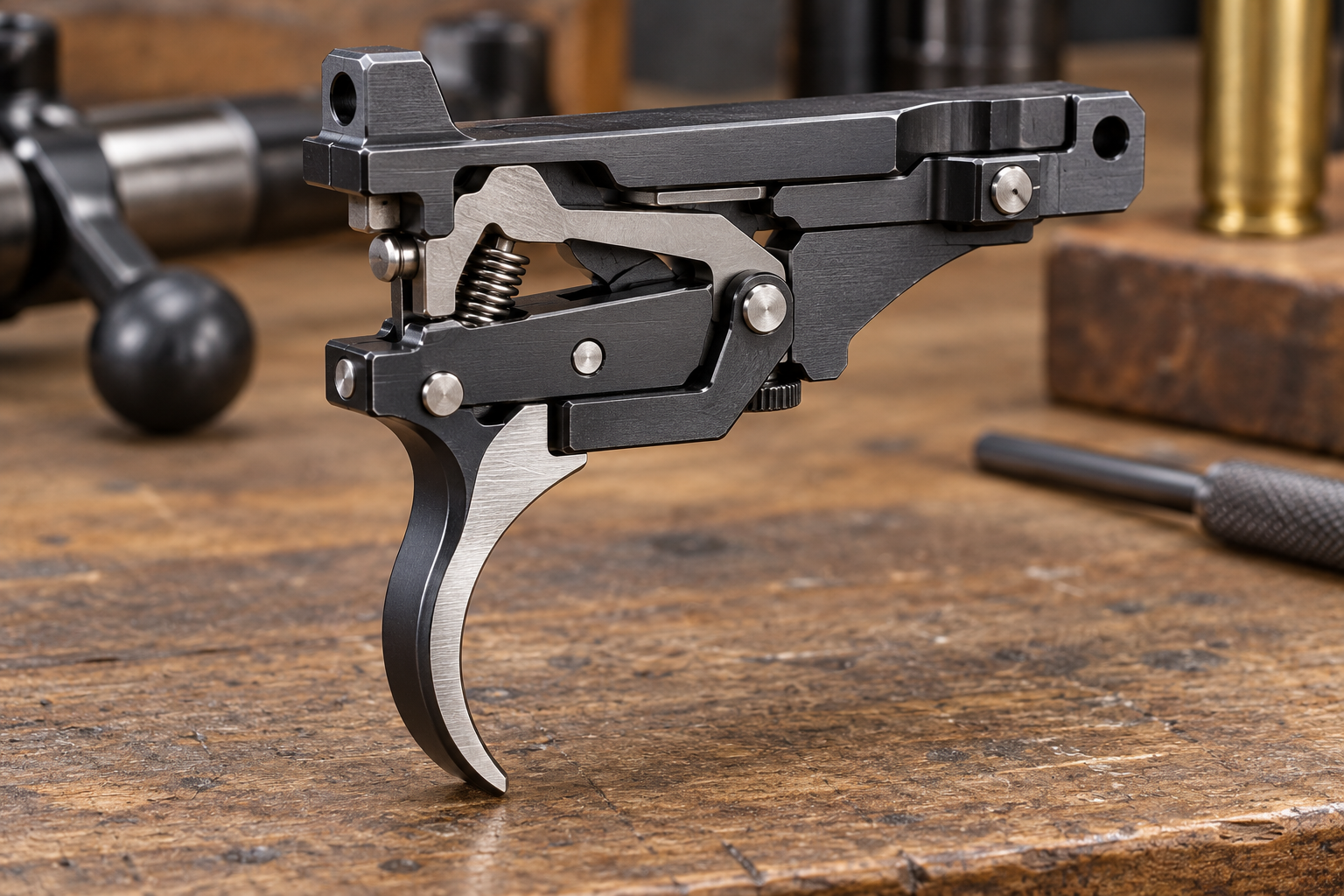
Field Reliability Matters More Than Bench Feel
Alaska Arms' existing content emphasizes reliability in actual field conditions, particularly in cold and wet environments. A trigger that feels excellent on a warm bench but behaves differently when exposed to cold, debris, hardened lubricant, or gloves does not solve the hunter's problem.
When evaluating a trigger upgrade, ask whether the trigger is appropriate for the intended environment, whether it can be operated confidently with hunting gloves, whether the safety continues to function correctly, whether the rifle has been inspected after installation, and whether the system is dependable when the rifle is carried and handled normally.
Common Mistakes When Upgrading a Mauser 98 Trigger
1. Assuming the Original Trigger Is Bad Because It Is Two-Stage
A two-stage military trigger is not automatically defective. It was designed that way intentionally. Replace it because the rifle's use or condition justifies the change, not simply because modern triggers feel different.
2. Buying by Model Name Alone
A part being labeled Mauser does not prove compatibility with every Mauser-pattern action. Verify the exact rifle.
3. Modifying Unknown Previous Work
If an old trigger has already been altered, do not assume additional modification will fix it. A professional inspection may show that replacement is the better path.
4. Choosing the Lightest Possible Trigger
The lightest setting is not automatically the safest or most useful setting for a hunting rifle. The intended use should drive the decision.
5. Ignoring the Safety System
Trigger replacement affects a system, not one isolated component. The safety and firing mechanism must continue to operate correctly.
6. Treating Installation as a Simple Parts Swap
Even when a trigger is designed as a replacement, fit and safe function still require verification.
7. Modifying a Valuable Collector Rifle Without Considering Originality
Once original parts or surfaces are permanently altered, collector value may be difficult or impossible to recover.
Choosing a Replacement Trigger for a Mauser 98
Confirm Compatibility
The replacement must match the actual Mauser action and safety arrangement.
Consider the Rifle's Purpose
A working Alaska hunting rifle may prioritize reliability and predictable control. A target rifle may prioritize a different feel. A collector rifle may be best left alone.
Look at the Manufacturer
For a component that directly controls firing, manufacturing quality matters. Alaska Arms operates a CNC machine shop in Big Lake, Alaska, and describes experience spanning aerospace, medical, military, and custom-firearm work.
Think About the Whole Build
A trigger upgrade may be part of a larger plan involving bolt-handle geometry, scope mounting, stock fit, bottom metal, barrel selection, sights, and overall rifle balance.
How a Trigger Upgrade Fits Into a Mauser 98 Build
|
Component |
Primary Purpose |
|
Trigger |
Shooter control and consistency |
|
Bolt handle |
Ergonomics, leverage, and scope clearance |
|
Scope rings |
Optic retention, position, and field adaptability |
|
Stock |
Fit, recoil management, and stability |
|
Bottom metal |
Magazine and handling configuration |
|
Barrel |
Chambering, condition, and mechanical accuracy potential |
This helps prevent one modification from being expected to solve a completely different problem. A good Mauser build works because the parts support one another.
Frequently Asked Questions
What kind of trigger does an original Mauser 98 use?
Traditional military Mauser 98 rifles commonly use a two-stage trigger. The first stage takes up initial movement, followed by a more defined second stage before the firing mechanism releases.
Is a two-stage Mauser trigger unsafe?
No. The two-stage design was intentionally used on military Mauser rifles. A trigger should be evaluated based on its condition and function, not simply because it has a traditional two-stage feel.
When should I replace my Mauser 98 trigger?
Replacement is worth considering when the trigger is damaged, inconsistent, excessively worn, badly modified, or does not suit the intended sporting use of the rifle.
Will replacing the trigger make my Mauser 98 more accurate?
A trigger does not change the intrinsic mechanical accuracy of the barrel and action. A more predictable trigger can make it easier for the shooter to fire without disturbing the rifle, which may improve practical consistency.
Does Alaska Arms make a replacement Mauser 98 trigger?
Alaska Arms identifies a Mauser 98 replacement trigger among its current products and describes it as a Winchester Model 70-style adjustable trigger for replacing Mauser 98 trigger components.
Should I replace the trigger on a collectible Mauser?
Usually only after considering the historical and collector implications. A previously sporterized or mismatched action presents a different decision from an original matching rifle.
Can I install a replacement Mauser trigger myself?
Trigger installation affects a firearm's firing and safety systems. Use a competent gunsmith unless you have the proper tools, skills, and manufacturer guidance to verify safe function.
What should matter most in a hunting trigger?
Prioritize predictable operation, reliability, appropriate resistance, positive function, compatibility with the rifle, and dependable use in the conditions where you actually hunt.
The Takeaway
The original Mauser 98 trigger was designed for a military rifle, and it succeeded because it was simple, rugged, and deliberate. That does not mean it is automatically the best trigger for every Mauser 98 still in use today.
If you are preserving a historically important rifle, the original system may belong exactly where it is. If you are building a practical hunting rifle from a surplus or already modified action, a properly selected modern trigger can make the rifle easier and more consistent to use without changing the qualities that made the Mauser 98 such an enduring platform.
The key is to treat a trigger upgrade as part of the complete rifle system, not as a contest to achieve the lightest possible pull.
Alaska Arms offers Mauser components alongside its other precision firearm parts. Visit Alaska Arms
CTA: Explore Mauser 98 parts and replacement triggers from Alaska Arms